BioCentral IBBioCentral IB
IB Biology · Theme B · B1.1

Carbohydrates and lipids

How the same handful of atoms build both an energy store and a structural fibre — and why one substitution turns a fat into a membrane.
Guiding questions

In what ways do variations in form allow diversity of function in carbohydrates and lipids?

How do carbohydrates and lipids compare as energy storage compounds?

Part one

Carbon chemistry: building and breaking macromolecules

B1.1.1 – B1.1.3
B1.1.1

Carbon builds everything

A carbon atom's four outer electrons let it form up to four covalent bonds — the basis of every organic molecule.
  • Carbon bonds to other carbon atoms or to non-metallic elements like oxygen, nitrogen and hydrogen, forming single or double bonds.
  • This lets carbon skeletons branch, chain and close into rings, all from the same handful of atoms.
  • Attached functional groups — hydroxyl (–OH), carbonyl (C=O), carboxyl (–COOH), amino (–NH₂), phosphate (–PO₄) — give the same basic skeleton very different chemical properties.
Why it mattersThe same four-bond capacity that builds a simple sugar also builds DNA, proteins and steroids — carbon's versatility is the root of life's molecular diversity.
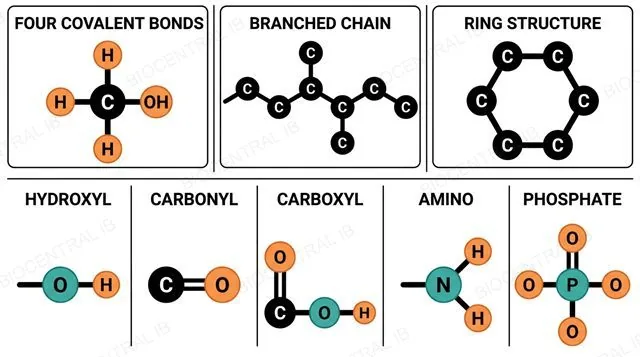
A carbon atom forming four covalent bonds, shown alongside a branched chain and a ring structure, with common functional groups labeled
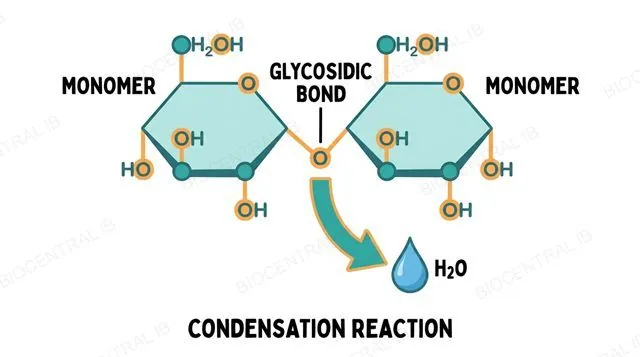
Two glucose monomers joining in a condensation reaction, releasing a water molecule and forming a glycosidic bond
B1.1.2

Building polymers, one water molecule at a time

A condensation reaction joins two monomers into a larger molecule, releasing a water molecule each time.
  • Repeating this pattern links many monomers into a polymer.
  • The same basic reaction builds every macromolecule class, just with a different bond name:
    • Glycosidic bond — links monosaccharides into carbohydrates
    • Ester bond — links glycerol to fatty acids
    • Peptide bond — links amino acids into proteins
    • Phosphodiester bond — links nucleotides into nucleic acids
  • Two monosaccharides condensing gives a disaccharide — maltose, sucrose or lactose.
Why it mattersOne mechanism, four macromolecule classes — condensation is the universal assembly method of biochemistry.
B1.1.3

Digestion is hydrolysis at scale

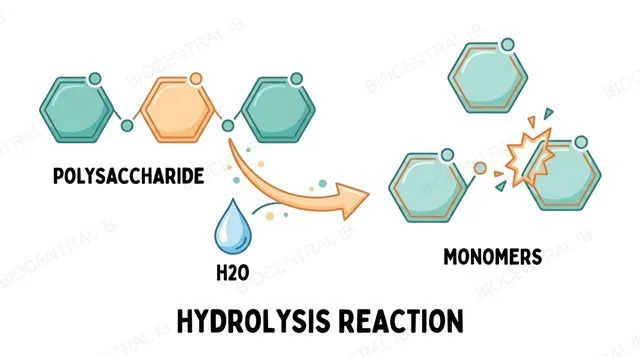
Hydrolysis is condensation in reverse: water is added across a bond to split a polymer back into its monomers.
  • Digestion works exactly this way — enzymes catalyse hydrolysis of dietary polymers into pieces small enough to absorb.
  • Amylase hydrolyses starch into maltose; maltase, sucrase and lactase then hydrolyse disaccharides into single sugars.
  • The same principle applies everywhere:
    • Proteins → amino acids
    • Triglycerides → glycerol + fatty acids
    • Nucleic acids → nucleotides
Why it mattersCondensation builds using water's removal; hydrolysis breaks using water's addition — the same bond, made and unmade by opposite reactions.
A polysaccharide chain being hydrolyzed by a water molecule, breaking a glycosidic bond into two separate monomers
Part two

Carbohydrates: form and function

B1.1.4 – B1.1.7
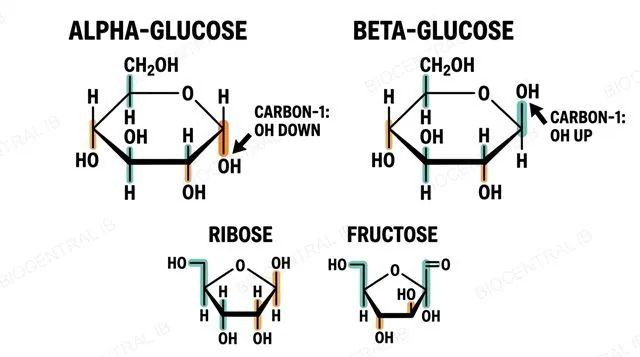
Ring structures of alpha-glucose and beta-glucose side by side, with the OH group orientation on carbon-1 labeled for each
B1.1.4

One formula, many sugars

A monosaccharide is a single sugar unit, the simplest carbohydrate, with the general formula (CH₂O)ₙ.
  • Glucose (C₆H₁₂O₆) is the primary fuel for respiration and exists in two ring forms — α-glucose and β-glucose — differing only in which way the –OH group points on carbon-1.
  • That one difference decides whether the resulting polymer coils (starch, glycogen) or runs straight (cellulose).
  • Other monosaccharides:
    • Ribose and deoxyribose — form the RNA/DNA backbones
    • Galactose and fructose — glucose isomers, same formula but different atom arrangement
Why it mattersGlucose's solubility, easy transport, chemical stability and high energy yield on oxidation are exactly why cells use it as their main fuel.
B1.1.5

Starch and glycogen: coiled for storage

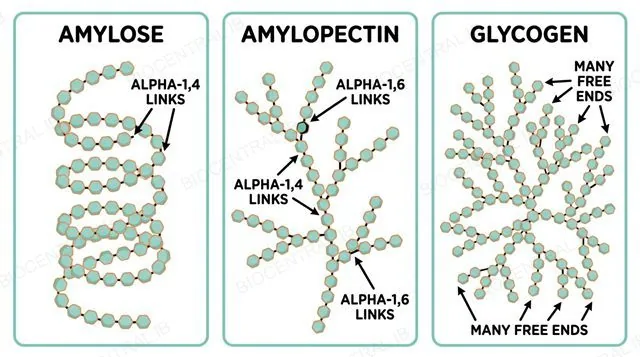
Starch (plants) and glycogen (animals) are compact, insoluble α-glucose polymers built purely for energy storage.
  • Starch is a mix of amylose (a long unbranched helix of α-1,4 links) and amylopectin (branched, with occasional α-1,6 links).
  • Glycogen is built the same way but is even more branched, giving it many free ends for rapid glucose release when energy is needed suddenly.
  • Both stay insoluble despite their size, so a cell can store glucose without disturbing its own osmotic balance.
  • Monomers are easily added or removed by condensation or hydrolysis.
Why it mattersCompactness and easy monomer access make these the ideal short-to-medium-term energy reserve.
Amylose as a coiled helix, amylopectin as a branched structure, and glycogen as an even more highly branched structure, all made of alpha-glucose
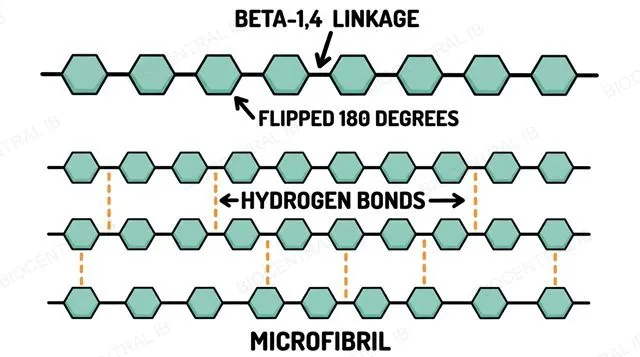
Beta-glucose monomers alternating orientation to form a straight cellulose chain, with parallel chains cross-linked by hydrogen bonds into a microfibril
B1.1.6

Cellulose: the same sugar, a different job

Cellulose is a structural polysaccharide of β-glucose — chemically almost identical to starch, functionally its opposite.
  • The β-1,4 linkage forces every second glucose unit to flip 180°, producing a straight, unbranched chain rather than a coil.
  • Parallel chains lie side by side and are cross-linked by hydrogen bonds between their –OH groups, bundling into strong microfibrils.
  • This gives cellulose real tensile strength, making it an effective cell-wall material.
  • Most organisms lack the enzyme to hydrolyse β-1,4 bonds, so it can't double as an energy store.
Why it mattersA single flipped bond turns a compact energy store into rope-like structural fibre — form follows one small chemical difference.
B1.1.7

Sugar tags for cell recognition

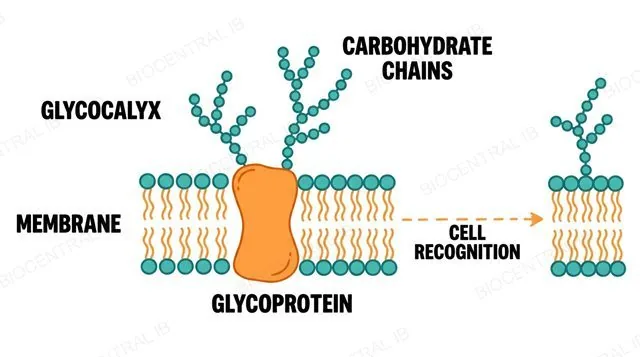
A glycoprotein is a membrane protein with carbohydrate chains attached — a molecular identity tag facing outward.
  • These carbohydrate chains form part of the glycocalyx, letting cells recognise each other.
  • The immune system uses this pattern to tell the body's own cells from foreign ones.
  • The ABO blood-group antigens on red blood cells are glycoproteins and glycolipids.
  • The same kind of recognition guides tissue formation and sperm–egg binding at fertilisation.
Why it mattersWithout a reliable self/non-self tag, the immune system couldn't function and blood transfusions would be impossible.
A cell membrane with an embedded glycoprotein, its carbohydrate chains extending outward as part of the glycocalyx, shown recognizing a matching pattern on a neighboring cell
Quick check

Cellulose and starch are both made almost entirely of glucose. Why can't most animals use cellulose as an energy source?

Cellulose is insoluble in water
Most animals lack the enzyme to hydrolyse cellulose's β-1,4 linkages
Cellulose contains too little chemical energy per gram
Cellulose has no glycosidic bonds at all
Correct answer: the enzyme barrier, not the energy content. Cellulose is just as energy-rich as starch — most animals simply don't produce an enzyme that can hydrolyse its β-1,4 linkages.
Part three

Lipids: structure, storage and membranes

B1.1.8 – B1.1.13
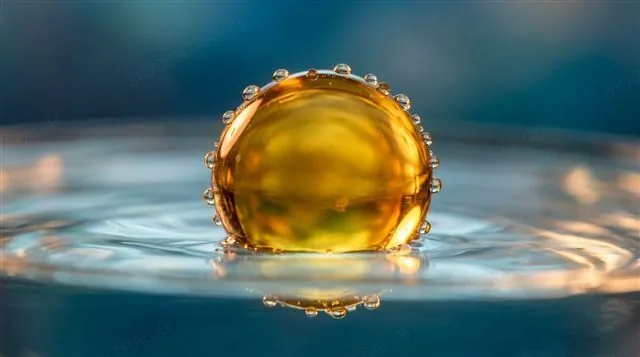
A droplet of oil in water, with water molecules clustering around it but not mixing, illustrating the hydrophobic property of lipids
B1.1.8

Lipids: built to repel water

Lipids are mostly non-polar C–H and C–C bonds, so they're largely hydrophobic and barely dissolve in water.
  • This class includes fats, oils, waxes and steroids.
  • Their insolubility is directly useful: lipids can be packed into large, compact, water-free stores without dragging in water by osmosis the way a hydrated sugar store would.
  • That same water-excluding property is also exactly what lets lipids build the core of every cell membrane.
Why it mattersOne structural property — insolubility — explains both how lipids are stored and how membranes are built.
B1.1.9

One glycerol, two different lipids

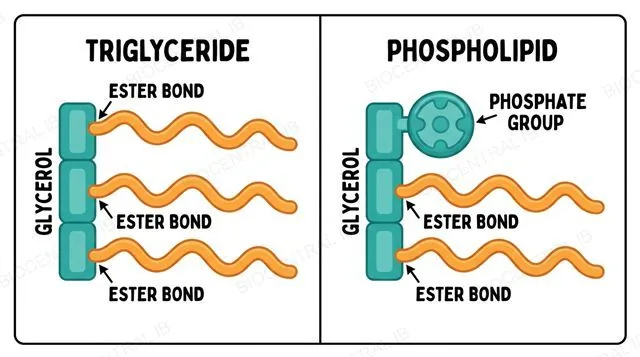
A triglyceride is glycerol condensed with three fatty acids; a phospholipid swaps one fatty acid for a phosphate group.
  • Each fatty acid attaches to glycerol through an ester bond, releasing water as it forms — the same condensation pattern seen throughout biochemistry.
  • Triglycerides, with three fatty acid tails and nothing else, are purely hydrophobic.
  • Phospholipids keep two fatty acid tails but replace the third position with a phosphate group.
  • That one substitution is enough to make the whole molecule amphipathic — part hydrophilic, part hydrophobic.
Why it mattersThat single swapped group is the entire reason phospholipids can build membranes while triglycerides can only be stored.
A glycerol backbone linked to three fatty acid chains forming a triglyceride, next to glycerol linked to two fatty acids and one phosphate group forming a phospholipid
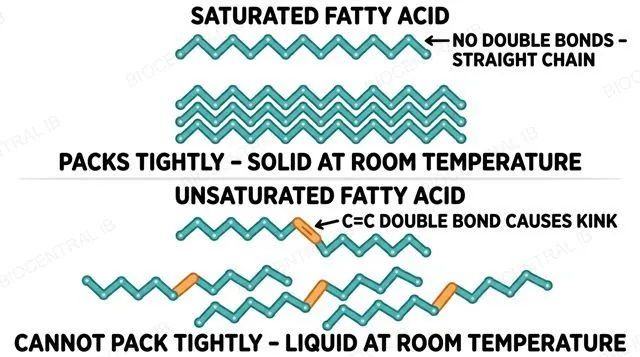
Three fatty acid chains compared: a straight saturated chain, a monounsaturated chain with one kink, and a polyunsaturated chain with multiple kinks
B1.1.10

Kinks control melting point

The number of C=C double bonds in a fatty acid's tail decides whether it packs into a solid or stays a liquid.
  • Saturated fatty acid — no double bonds, straight tail packs tightly against its neighbours, typically solid at room temperature (most animal fats).
  • Monounsaturated fatty acid — one double bond, adding a single kink.
  • Polyunsaturated fatty acid — two or more double bonds, adding several kinks.
  • Each kink disrupts tight packing, so unsaturated fatty acids stay liquid as oils — the form most plant and fish fats take.
Why it mattersThis is why butter is solid and olive oil isn't — the same basic molecule, just a different number of kinks.
B1.1.11

Fat: the densest energy store

Triglycerides store more energy per gram than carbohydrates and double as thermal insulation in adipose tissue.
  • Fatty acid carbons are more reduced than carbohydrate carbons — they carry more C–H bonds relative to oxygen — so oxidising them releases more energy per gram.
  • Their hydrophobic, compact structure also stores that energy without the extra mass of water a hydrated sugar store would carry.
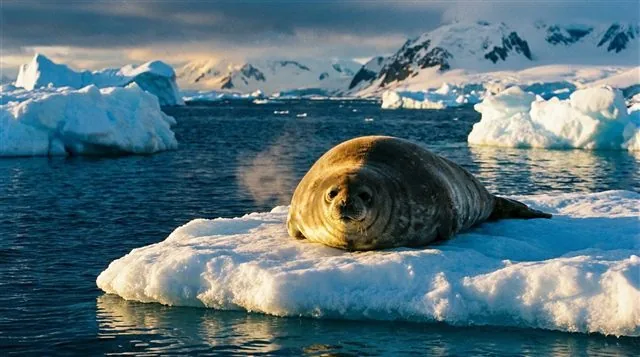
  • A layer of adipose tissue beneath the skin, or blubber in marine mammals, reduces heat loss because lipids conduct heat poorly.
Why it mattersThe same properties that make triglycerides energy-dense also make them effective insulators — two functions from one molecular structure.
A cross-section of skin showing a thick layer of adipose tissue beneath, and a seal insulated by blubber resting in cold water
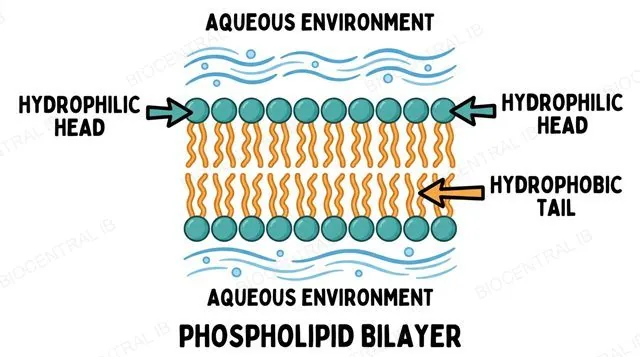
A phospholipid bilayer with hydrophilic heads facing outward into water on both sides and hydrophobic tails facing inward, shielded from water
B1.1.12

Membranes build themselves

A phospholipid's hydrophilic head and hydrophobic tails make it amphipathic — and that alone is enough to build a membrane.
  • Surrounded by water on both sides, phospholipids spontaneously arrange into a bilayer.
  • Hydrophilic heads face outward into the water; hydrophobic tails face inward, shielded from it.
  • No enzyme or energy input is required — the hydrophobic effect alone drives this self-assembly.
  • It's the structural basis of every cell membrane in every organism.
Why it mattersA membrane isn't built — it assembles itself, purely from the physics of hydrophobic and hydrophilic regions meeting water.
B1.1.13

Steroids slip straight through

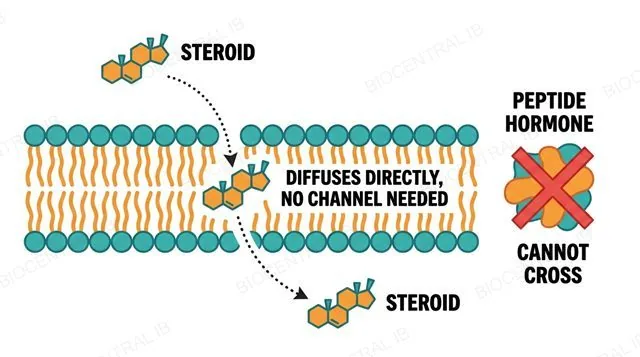
Small, non-polar steroids like cholesterol, oestradiol and testosterone can diffuse directly through the phospholipid bilayer.
  • Because they carry no charge and are non-polar, steroids pass straight through the membrane's hydrophobic core without needing a channel or carrier protein.
  • Polar or charged molecules cannot cross that same core unassisted.
  • This lets steroid hormones enter a target cell directly and bind receptors inside the cytoplasm or nucleus.
  • Peptide hormones are polar, can't cross the membrane, and instead bind receptors on the cell surface.
Why it mattersWhether a hormone can cross a membrane unassisted determines where inside — or outside — the cell it has to act.
A small non-polar steroid molecule with its characteristic four-ring structure diffusing directly through a phospholipid bilayer, next to a polar peptide hormone blocked at the membrane surface
Quick check

Why can a steroid hormone like testosterone bind a receptor inside the cytoplasm, while a peptide hormone can't?

Peptide hormones are too large to be secreted
Testosterone is non-polar and diffuses directly through the bilayer; the polar peptide hormone can't cross it
Peptide hormones don't have specific receptors
Testosterone only binds receptors on the outside of the cell
Correct answer: testosterone crosses the membrane unassisted; the peptide hormone can't. Testosterone is small and non-polar, so it diffuses straight through the hydrophobic bilayer core. Peptide hormones are polar and can't cross at all, so their receptors sit on the cell surface instead.

Key vocabulary

Worth being able to define in a single sentence each

Condensation reaction
Joins two monomers into a larger molecule, releasing water.
Hydrolysis reaction
Adds water across a bond to split a polymer into monomers.
Monosaccharide
A single sugar unit, the simplest carbohydrate.
Polysaccharide
A polymer of many monosaccharides linked by glycosidic bonds.
Glycoprotein
A protein with carbohydrate chains attached, used in cell recognition.
Triglyceride
Glycerol joined to three fatty acids by ester bonds.
Phospholipid
Glycerol with two fatty acids and a phosphate group; amphipathic.
Steroid
A small, non-polar lipid that can cross membranes unassisted.

B1.1 Carbohydrates and lipids — one-page recap

Screenshot this slide to revise from

Carbon & macromolecules
  • Carbon: four covalent bonds → chains, branches, rings.
  • Condensation builds polymers; hydrolysis breaks them.
Monosaccharides
  • α/β-glucose differ only in C1 –OH orientation.
  • Ribose/deoxyribose (RNA/DNA); galactose/fructose (glucose isomers).
Storage vs structural carbs
  • Starch/glycogen: coiled α-glucose, energy storage.
  • Cellulose: straight β-glucose, H-bonded microfibrils, structural.
Glycoproteins & lipids
  • Glycoproteins tag cells for recognition (ABO antigens).
  • Lipids are hydrophobic: fats, oils, waxes, steroids.
Triglycerides & fatty acids
  • Triglyceride = glycerol + 3 fatty acids; energy + insulation.
  • Saturation (0/1/2+ C=C bonds) sets melting point.
Membranes & steroids
  • Phospholipids (amphipathic) self-assemble into bilayers.
  • Non-polar steroids cross membranes unassisted; polar hormones can't.

Where this shows up again

A1.1
The solvent properties of water are essential for the transport of glucose in blood plasma. How does the polarity of glucose enable its dissolution and transport?
B2.1
How does the structure of phospholipids, introduced here, underpin the formation and selective permeability of cell membranes?
B1.2 · B2.1
Protein channels and pumps embedded in the phospholipid bilayer handle membrane transport. How do amino acid R-groups determine whether a protein region sits within the hydrophobic core or faces the aqueous environment?
C1.2
During prolonged starvation, the body shifts from carbohydrate to lipid metabolism. How does this relate to the different energy-storage roles of glycogen and adipose tissue?

Same atoms, opposite jobs

One flipped bond turns an energy store into a structural fibre — form and function, all the way down.
B1.1 Carbohydrates and lipids · BioCentral IB
Use ↓ ↑ or click to navigate
01 / 20