BioCentral IB
B2.3.1
One genome, many fates
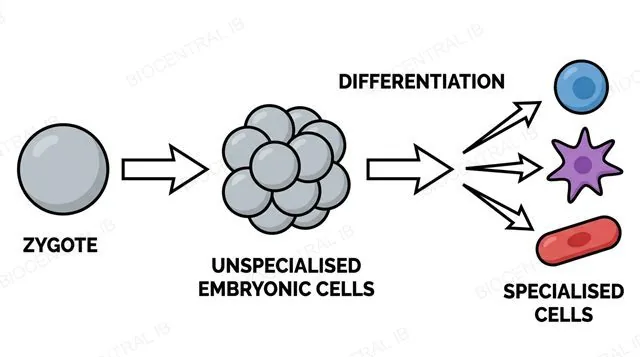
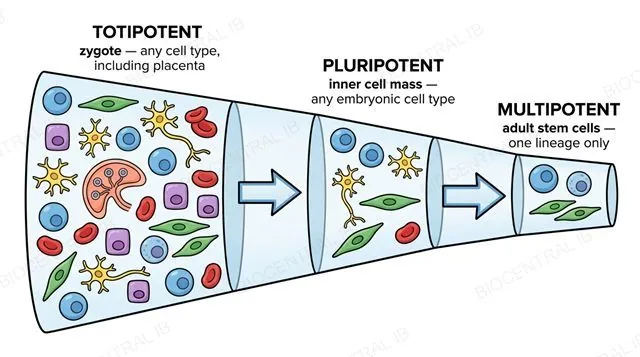
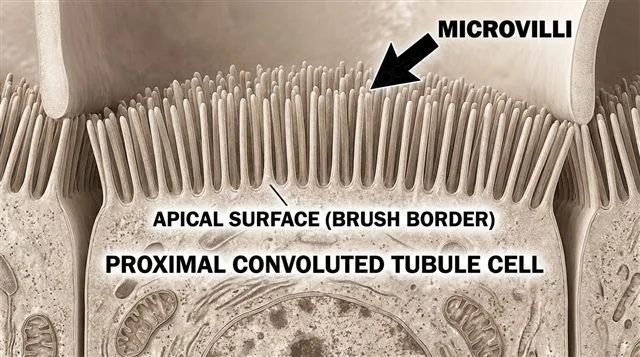
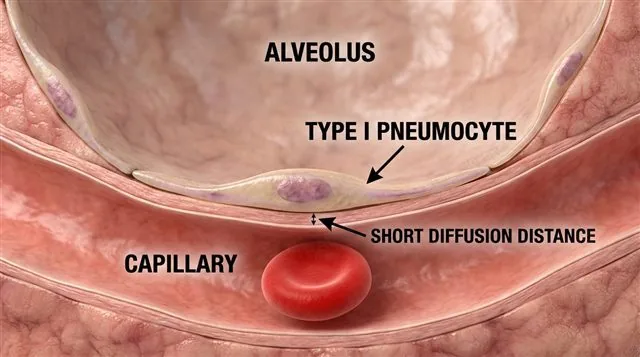
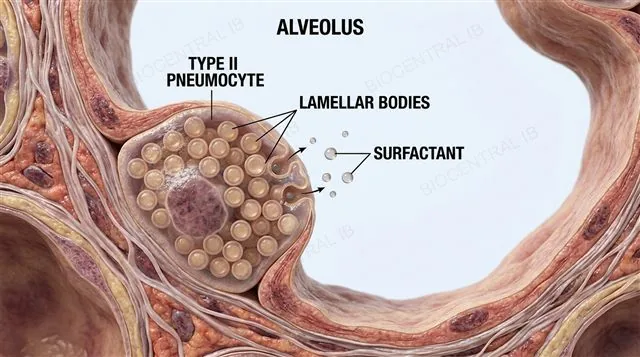
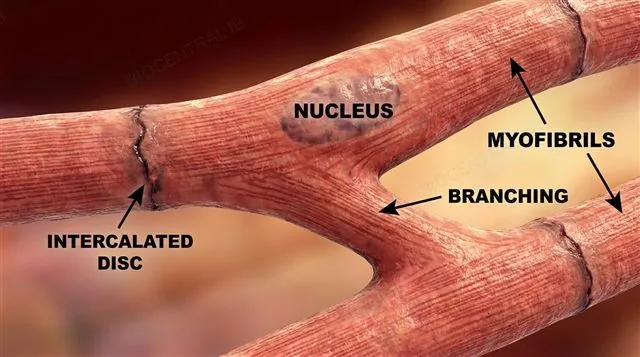
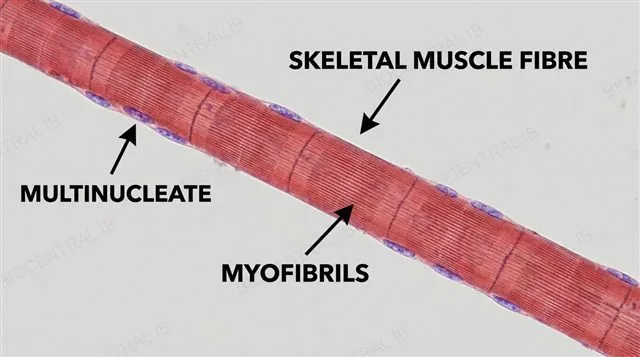
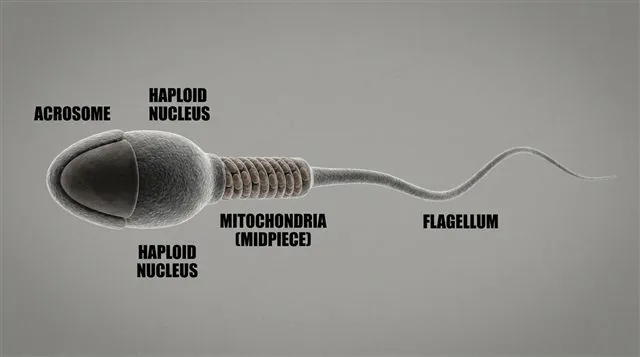
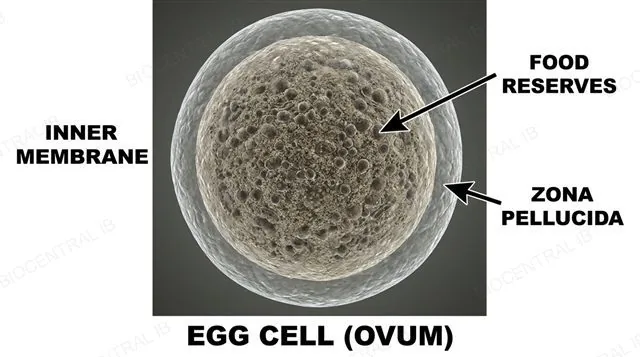
After fertilisation, the zygote divides into unspecialised embryonic cells that then undergo differentiation — becoming specialised for a particular function.
- Every cell in the embryo carries the same DNA sequence; differentiation never changes the genome. What changes is differential gene expression — different genes switched on or off in different cell types, controlled by transcription factors and other regulatory proteins.
- Molecular gradients (morphogens) spreading through the embryo give each cell positional information — a cell's location determines which genes it expresses, steering it toward a particular fate.
Why it mattersDifferentiation is never about deleting or adding genes — it's entirely about which of the same genes get read.